
Key Takeaways
- Whitening works best on natural teeth with surface stains from coffee, tea, or tobacco, and it will not change the color of veneers, crowns, caps, or fillings
- Porcelain veneers are listed at ₱15,000 to ₱30,000 per tooth with an 8-15 year lifespan, while composite veneers cost ₱3,000 to ₱15,000 per tooth and are easier to repair but less stain-resistant
- Veneer treatment removes a layer of tooth enamel, which makes the process irreversible, so any decay or gum disease needs treatment first
- In-office whitening in the Philippines is generally listed at ₱5,000 to ₱12,000 with results that fade within 6-12 months, and dentist-supervised at-home whitening kits are listed at ₱3,000 to less than ₱9,000
- Aratea Dental Clinic and Laboratory approaches cosmetic treatment planning through careful evaluation and clear explanation of each option
Stained front teeth or a smile that looks uneven can make anyone hesitate before a photo or a conversation that feels a little too close. Two cosmetic options usually come up in that search for a brighter, more even smile: teeth whitening and dental veneers. They solve different problems, cost differently, and last differently, so picking one without understanding the cause of the concern can lead to disappointing results or unnecessary expense.
Stained or Uneven Teeth? Know Your Options First
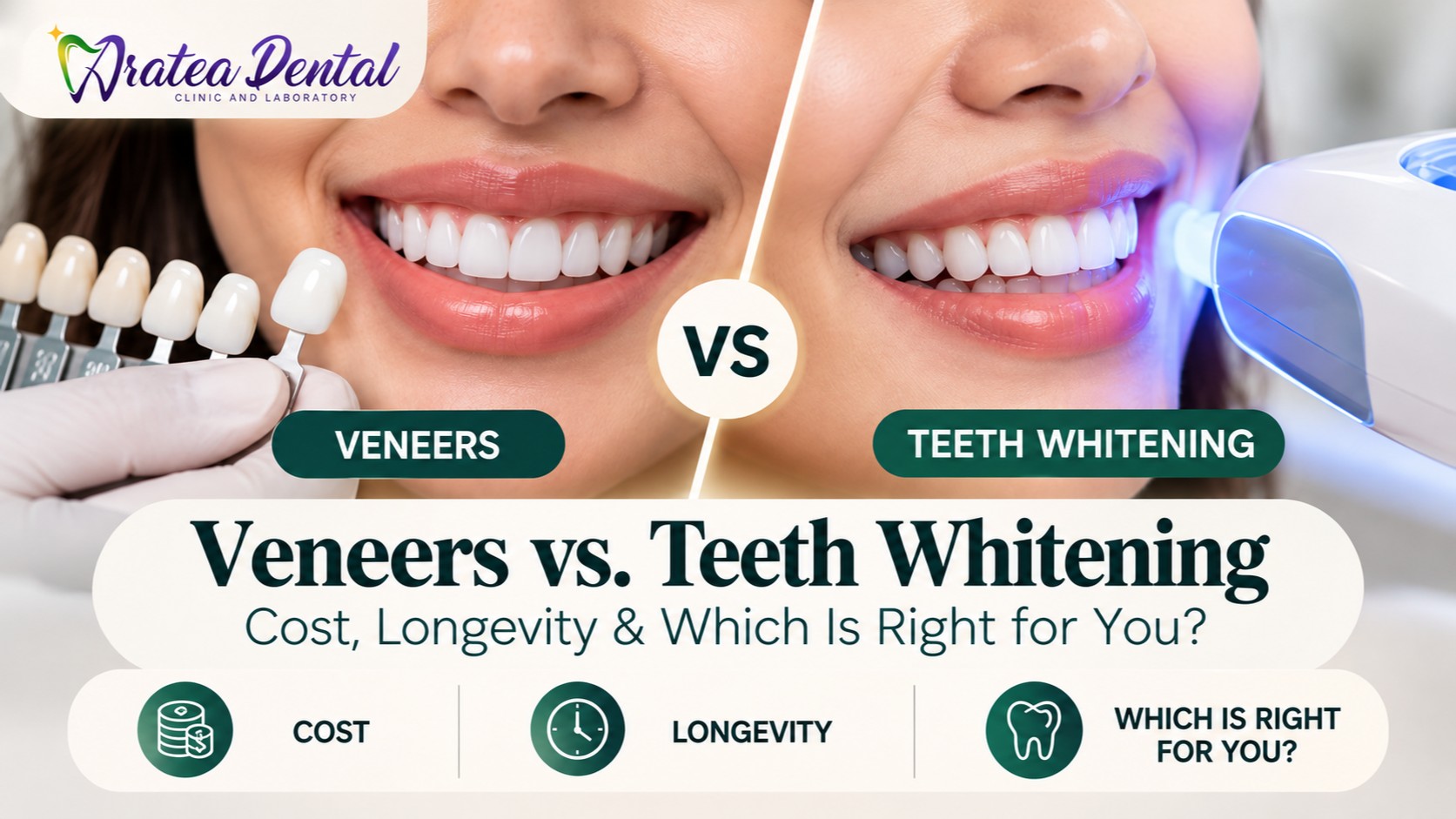
Whitening and veneers often get mentioned together, yet they work in entirely different ways. Whitening uses a bleaching agent to lighten the natural color of a tooth, while veneers physically cover the front surface of a tooth with a new material entirely. That difference determines what each option can realistically fix.
Someone with naturally yellowed teeth from years of coffee or tea may see real improvement with a bleaching treatment. Someone with a chipped edge, a gap between front teeth, or a tooth that looks misshapen will not get those issues solved by whitening, no matter how many sessions are done. Veneers tend to be the better starting point for that second kind of concern, since a dental assessment can clarify which issue is actually present before any treatment begins.
Cost and expected lifespan are useful to compare side by side, and this guide walks through both. The more important first step, though, is understanding why the teeth look the way they do, since that answer usually points toward the right treatment on its own.
What’s Really Causing the Discoloration
Not all tooth discoloration comes from the same source, and that distinction decides whether whitening will actually work.
Stains Whitening Can Lighten
Surface stains, often called extrinsic stains, build up from everyday habits. Coffee, tea, red wine, and tobacco all contain strong pigments that cling to the outer enamel layer of a tooth. Over time these pigments darken the tooth’s appearance, and because the staining sits on the surface, a bleaching agent can usually break down those pigments and restore a brighter shade. Age-related yellowing, which happens as enamel thins and the naturally yellower dentin underneath becomes more visible, can also respond reasonably well to whitening in many cases.
Yellow-toned teeth generally bleach well, which makes whitening a reasonable first option for anyone whose main concern is a dull or yellowish shade rather than a structural issue with the tooth itself.
When Whitening Won’t Help
Brown-toned teeth tend to respond less predictably to bleaching, and teeth with a grey tone often do not lighten at all, regardless of the product or technique used. Whitening also cannot change the color of veneers, crowns, caps, or fillings already in the mouth, so anyone with existing dental work on their front teeth may end up with an uneven shade between natural teeth and restorations after a whitening treatment.
Discoloration caused by certain medications or by a past tooth injury may not respond to whitening either, since the stain sits deeper within the tooth structure rather than on the surface. In these situations, a dental assessment is the only reliable way to find out whether bleaching will make a visible difference or whether a different approach, such as a veneer, suits that particular tooth better.
How Whitening Works and What to Expect
Whitening products rely on one of two bleaching agents, hydrogen peroxide or carbamide peroxide, to break stains into smaller pieces so the color appears less concentrated and the tooth looks brighter. The process is straightforward in concept, though the method and the strength of the bleaching agent used can vary quite a bit.
In-Office, Take-Home, and Over-the-Counter Choices
There are a few common ways to whiten teeth, each with a different balance of convenience, strength, and supervision:
- In-office bleaching, sometimes called chairside bleaching, usually needs only one visit and can take up to two hours, with a dentist applying a protective gel or shield before the bleach goes on the teeth. In the Philippines, this option is generally listed at ₱5,000 to ₱12,000 for one to two sessions, with results that tend to last around 6 to 12 months.
- Dentist-supervised take-home whitening kits use a custom-fitted tray with a bleaching solution and can take anywhere from a few days to a few weeks to show full results, depending on the concentration used and how often the tray is worn. The Philippine guide lists these kits at ₱3,000 to less than ₱9,000.
- Over-the-counter products, such as whitening strips or toothpaste, use a lower concentration of bleaching agent than what a dentist would use and are generally listed at less than ₱7,000.
Some patients may need additional sessions or a switch from in-office treatment to a take-home system to reach the shade they want, since results can vary from one person to another.
Sensitivity and Other Side Effects
Temporary tooth sensitivity is a common side effect of whitening, caused when the bleaching agent passes through the enamel and reaches the nerve inside the tooth. This sensitivity usually settles down on its own, and treatment can simply be paused and resumed later if it becomes uncomfortable. Overusing whitening products, however, can damage tooth enamel or irritate the gums, which is why following product directions and checking in with a dentist matters more than chasing a faster result.
Whitening results fade over time, particularly with continued exposure to staining foods and drinks. This fading is one of the key differences to weigh against veneers, which behave very differently once placed.
How Veneers Change a Smile
Veneers are custom-made coverings bonded to the front surface of a tooth, designed to change how that tooth looks rather than how light or dark its natural color is. They can improve the appearance of teeth that are chipped, broken, stained, crooked, misshapen, or affected by visible gaps, which suits concerns that whitening simply cannot touch.
Porcelain vs Composite Veneers
The two main veneer materials each come with their own trade-offs:
- Porcelain veneers are custom-made, strong, long-lasting, and natural-looking, though they tend to be the more expensive option. These are generally listed at ₱15,000 to ₱30,000 per tooth, with an expected lifespan of 8 to 15 years.
- Composite veneers are made from a tooth-colored filling material bonded directly onto the tooth. They may require less enamel removal and fewer dental visits, and they are generally easier to repair if damaged, though they are less resistant to staining and wear compared to porcelain. These are generally listed at ₱3,000 to ₱15,000 per tooth.
Material choice often comes down to budget, the number of teeth involved, and how much change is needed to reach the desired look, all of which a dental assessment can help clarify.
Why the Treatment Is Irreversible
Placing a veneer requires removing a thin layer of enamel from the front and sides of the tooth so the veneer can bond properly and sit flush with the surrounding teeth. Because that enamel does not grow back, veneer treatment is considered irreversible once it begins. Any existing dental issues, such as decay or gum disease, need to be treated beforehand, since placing a veneer over an unhealthy tooth can make the underlying problem worse rather than better.
Chipping, Wear, and Repairs Over Time
Veneers are durable, but they are not indestructible. A veneer may chip, crack, wear down, or loosen over time, and when that happens, a dentist can often re-bond, repair, or replace it depending on the extent of the damage. People who clench or grind their teeth, or who have a deep overbite, may find that veneers do not suit their bite, which is another reason a proper evaluation matters before committing to this treatment. Everyday habits also play a role in how long a veneer lasts, so avoiding nail-biting, chewing on hard objects, and wearing a mouthguard during sports can help protect the investment.
Comparing Cost and Expected Lifespan
Laid out side by side, the cost and lifespan differences between whitening and veneers become clearer:
- In-office whitening: generally listed at ₱5,000 to ₱12,000, with results lasting roughly 6 to 12 months.
- Laser whitening: generally listed at ₱15,000 to ₱25,000, with results lasting around 1 to 2 years.
- Dentist-supervised take-home whitening kits: listed at ₱3,000 to less than ₱9,000, used over one to two weeks.
- Over-the-counter kits: generally listed at less than ₱7,000.
- Composite veneers: generally listed at ₱3,000 to ₱15,000 per tooth.
- Porcelain veneers: generally listed at ₱15,000 to ₱30,000 per tooth, with an expected lifespan of 8 to 15 years.
Whitening carries a lower upfront cost but needs to be repeated every year or two to maintain results, since the brightening effect fades over time. Veneers cost more at the outset, particularly porcelain, but can last well over a decade with proper care, which shifts the long-term value calculation depending on how many teeth need treatment and how long the results are expected to hold.
Why a Dental Assessment Decides Best
Cost charts and lifespan figures are useful for planning a budget, but they cannot diagnose what is actually causing a particular tooth to look stained, chipped, or uneven. A dental assessment looks at the type of discoloration present, whether any existing dental work is involved, the condition of the enamel, and whether habits like grinding could affect the durability of a chosen treatment. That evaluation is what ultimately separates a good cosmetic outcome from a disappointing one, regardless of which option looks more appealing on paper.
Aratea Dental Clinic and Laboratory, led by Dr. Ma. Chona Aratea-Fajardo with 24 years of dental experience, approaches these cosmetic decisions through careful evaluation and clear explanation of each option before any treatment is recommended. That kind of assessment matters most for front teeth, where the margin for a mismatched shade or an unsuitable veneer is far less forgiving than it would be elsewhere in the mouth.
Anyone comparing a brighter smile against a reshaped one should start with an honest look at what is actually causing the concern, since that answer, more than any price list, points toward the treatment likely to deliver a lasting result. For a closer look at how veneers are planned and placed, these cosmetic dentistry options are worth checking before deciding on a direction.
Aratea Dental Clinic and Laboratory
arateadental@gmail.com
+63 954 236 0911
Unit 10, 2nd Floor, Salinas Premier
Salinas Drive, Lahug
Cebu City
CEBU
6000
Philippines


