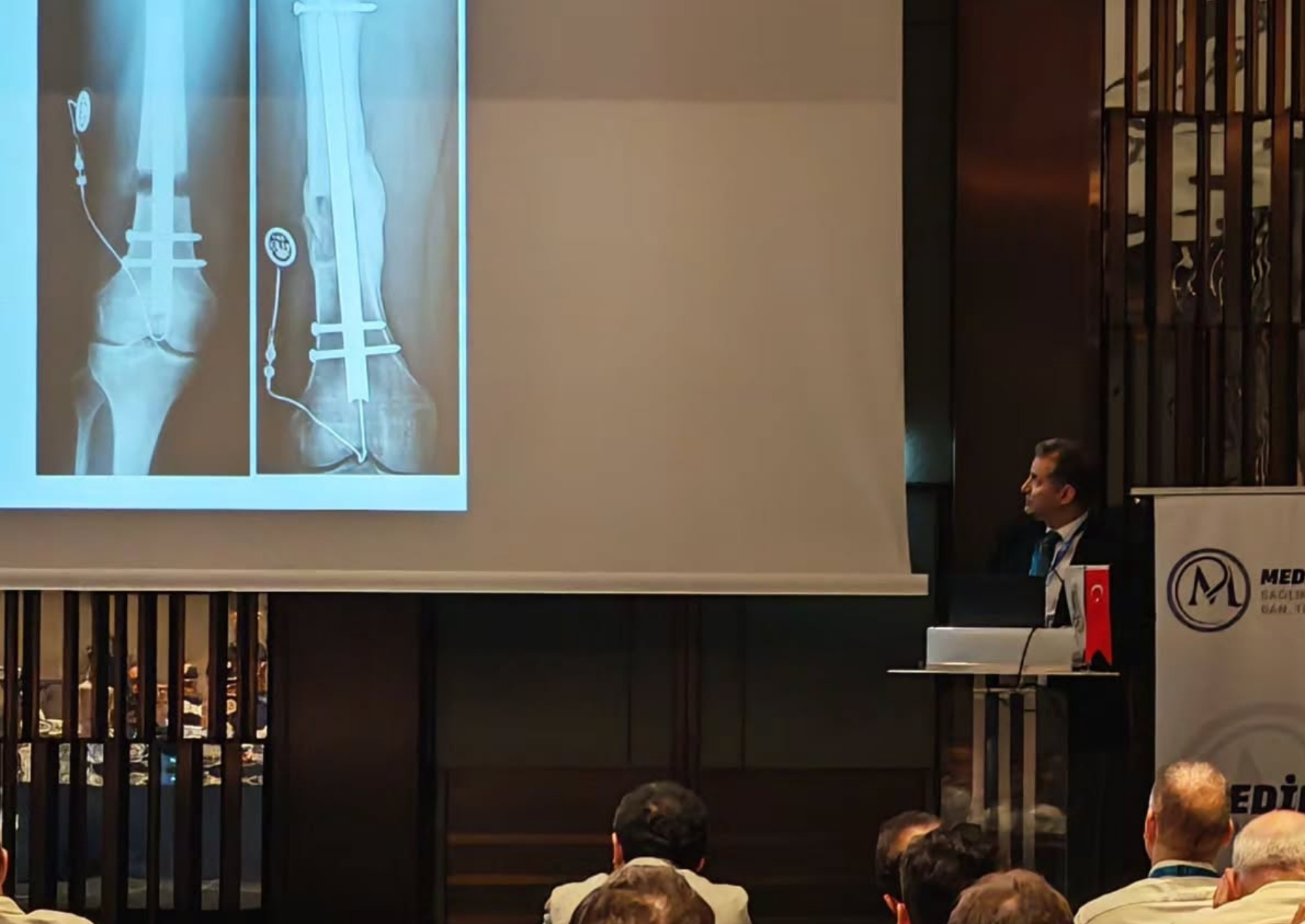
Prof. Dr. Halil İbrahim Balcı says medical fitness for cosmetic limb lengthening does not mean readiness for treatment and recovery lasting a year or more.
TURKEY, August 7, 2026 /EINPresswire.com/ — As interest in cosmetic limb lengthening grows, the decision to proceed should not rest simply on whether a patient can pass pre-operative medical checks. Suitability depends on whether the person can safely manage the treatment that follows, according to Prof. Dr. Halil İbrahim Balcı, MD, FEBOT, of the Istanbul Limb Lengthening & Reconstruction Centre (ILLRC).
Cosmetic limb lengthening, also known as height surgery, begins with an operation but continues through gradual lengthening, bone formation, physiotherapy and consolidation. Prof. Balcı says the overall process can last about a year and sometimes extend to around 18 months. This matters because candidates generally begin treatment as healthy people who walk normally. Preserving normal walking and function should remain central throughout the process.
“This is not a one-day treatment, and it does not end with the operation. Surgery is only one part of the process,” Prof. Balcı said. “The patient also has to be physically and psychologically prepared for what follows.”
Medical clearance is only the starting point
Assessment should consider more than whether someone can undergo an operation. General health, bone anatomy, body weight, nutrition and whether the planned implant is appropriate for the patient’s bone structure can all affect treatment.
Readiness also includes the ability to follow activity restrictions and continue physiotherapy as the process becomes tiring. Reduced weight-bearing may affect travel, work and ordinary daily tasks. Some patients may need help attending appointments or moving safely outside the home.
Prof. Balcı advises patients to arrange reliable support before surgery and to have a second option if that support becomes unavailable. The effect on employment and finances should also be considered in advance. Even working from home may be disrupted by treatment and rehabilitation.
The target must remain flexible
Prof. Balcı cautions against treating a requested number of centimetres as a guaranteed outcome. Bone formation and joint movement are assessed as lengthening progresses. If bone quality is poor or movement begins to deteriorate, continuing towards the original target may no longer be appropriate.
“Patients should focus on the safe amount of lengthening, rather than a fixed number of centimetres,” he said. “The safe amount cannot be known in advance. It has to be decided during follow-up by the doctor and patient together.”
This can be difficult after a patient has invested considerable time and money, but Prof. Balcı says those pressures should not override clinical judgement. If the safer decision is to stop earlier, finishing at a lower amount may be the responsible outcome.
Stopping lengthening does not bring treatment to an immediate end. The newly formed bone still needs time to consolidate before the patient can progress towards normal activity.
Technology does not replace biology
Internal lengthening implants may make parts of treatment more manageable for selected patients, but they do not remove biological or mechanical limits. Bone still has to heal, muscles and nerves still have to adapt, and implants remain subject to the forces placed on them.
Prof. Balcı also stresses the importance of close clinical follow-up. X-rays can show bone formation, but they do not reveal every problem. Changes in joint movement or developing contractures may require an adjustment to physiotherapy or to the lengthening plan.
“Internal lengthening nails may make the process more comfortable, but they do not remove the need for close follow-up,” Prof. Balcı said.
If sufficient bone does not form, the implant remains under mechanical load and may fail. Delayed healing, non-union or mechanical problems can require further treatment and, in some cases, another operation.
Assessment may show that surgery should be delayed while correctable problems are addressed. In some cases, Prof. Balcı says cosmetic limb lengthening should not be recommended at all. A requested height gain should not override clinical judgement about suitability or the preservation of function.
Prof. Balcı is Professor of Orthopaedics and Traumatology at Istanbul University. His clinical and academic work focuses on limb lengthening, deformity correction and complex extremity reconstruction.
This release provides general medical information and does not determine whether any individual is suitable for surgery. Suitability requires an individual clinical assessment.
Oğuz Aksoy
ILLRC – Istanbul Limb Lengthening & Reconstruction Centre
+90 541 630 40 60
email us here
Visit us on social media:
Instagram
Legal Disclaimer:
EIN Presswire provides this news content “as is” without warranty of any kind. We do not accept any responsibility or liability
for the accuracy, content, images, videos, licenses, completeness, legality, or reliability of the information contained in this
article. If you have any complaints or copyright issues related to this article, kindly contact the author above.

Media gallery